
What This Week’s Mental Health Headlines Mean for You | Psychotherapy Insights
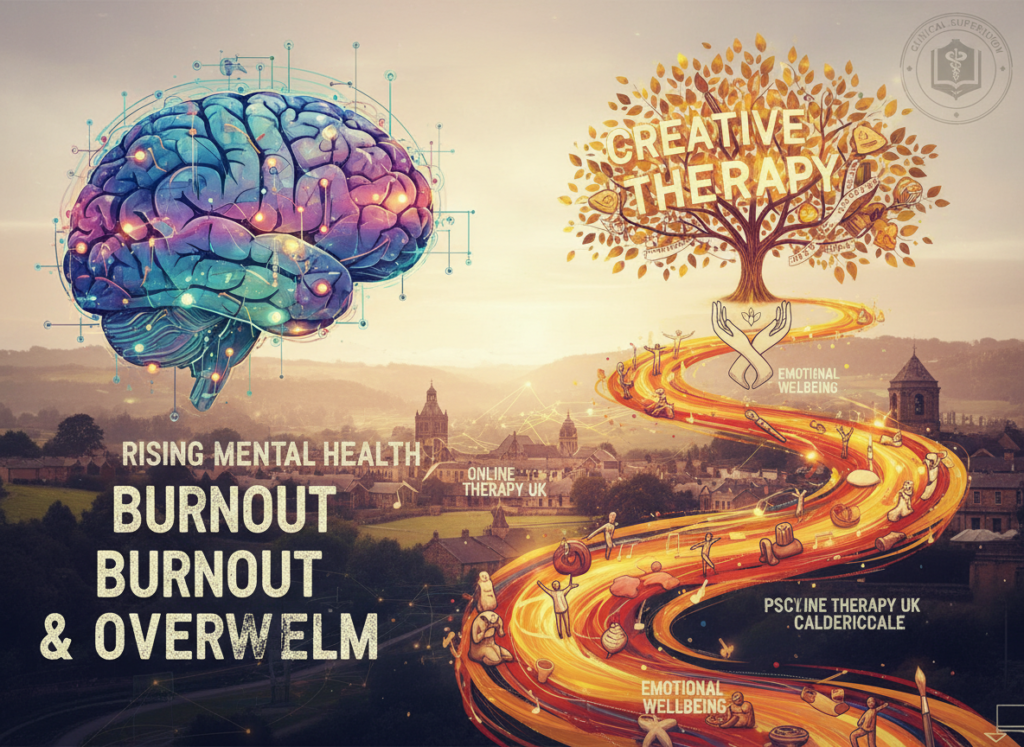
Rising diagnoses, quick-fix mental health trends and new research on creativity reveal a deeper truth about modern emotional wellbeing. Here is what it means and how relational psychotherapy can help.
The week’s mental health headlines reveal a landscape changing faster than most people can make sense of. Rising diagnoses, emotional overwhelm and the search for instant relief all point to the same underlying issue. People are struggling and do not know where to turn for real support.
Below is a clear breakdown of the key stories and what they mean in practical, human terms.
1. Rising diagnoses reflect a system under strain
The government’s review into mental health diagnoses has intensified debate, but the fundamental takeaway is that people are overwhelmed and services are stretched beyond capacity.
Why this matters:
Clients often assume a diagnosis means something is wrong with them. More often it signals that the system is unable to offer the depth of work people need.
How psychotherapy helps:
Relational, long-term psychotherapy creates change that quick, manualised interventions cannot. It offers space to explore overwhelm, trauma and entrenched relational patterns with continuity and depth.
2. Quick fixes cannot replace emotional work
The rise of rage rooms and intensity-based wellness experiences reflects a desire for relief without vulnerability. These experiences discharge energy, but they do not transform emotional structures.
Why this matters:
Temporary catharsis can mask deeper issues and delay real change.
How psychotherapy helps:
Working with anger, fear, shame and relational patterns over time allows emotional structures to reorganise rather than simply release.
3. Creativity is emerging as a therapeutic tool
New research confirms what many practitioners witness daily. Creative processes help people reconnect with themselves, regulate emotion and make meaning.
Why this matters:
Creativity accesses emotional layers untouched by language alone.
How psychotherapy helps:
My approach integrates relational depth with the creative sensibilities developed through decades of music and art practice.
4. The body responds to meaning and presence
Studies showing reduced inflammation after viewing original art reinforce what embodied psychotherapy demonstrates. The nervous system shifts when someone is genuinely seen and understood.
Why this matters:
Real change happens through relational and embodied experience, not insight alone.
How psychotherapy helps:
Sessions focus on emotional, relational and bodily awareness so change becomes stable and integrated.
5. Creative health is becoming a public health priority
Organisations are recognising that psychological safety, burnout prevention and relational communication deeply influence wellbeing and performance.
How I help organisations:
• Training for managers supporting neurodivergent staff
• Relational communication workshops
• Consultancy on burnout and culture
• Reflective practice groups for professionals
Working with me
I currently offer:
Psychotherapy for adults
Weekly sessions in person or online, focusing on trauma, relational patterns and long-term recovery.
Clinical supervision
For therapists and trainees seeking ethical clarity and reflective depth.
Training and consultancy
For teams wanting healthier communication, culture and wellbeing structures.