
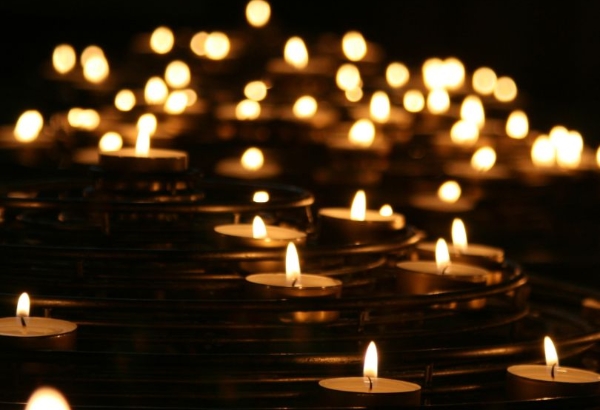
We are living through an era that strips people of certainty faster than they can replace it. Economic instability, political polarisation, environmental anxiety, social fragmentation, and the quiet erosion of trust in institutions have left many feeling unmoored. Mental health discourse has expanded rapidly, yet distress continues to rise. That contradiction should trouble us.
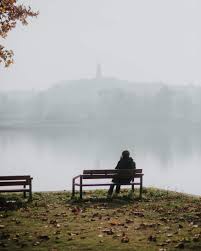
I see this every day in clinic, and the endless referrals I receive for support. The uncomfortable reality is this. Psychological techniques alone cannot carry the weight people are now being asked to bear. They help, but they are insufficient.
Spirituality, when properly understood, is not an optional extra. It is a structural necessity for human endurance. This is why I promote it, and this is why it is integral to everything I do.
The Failure of Purely Psychological Solutions
Modern culture has attempted to medicalise and individualise suffering through the arrogance and delusional belief that humanity knows best. Anxiety becomes a disorder. Burnout becomes a productivity issue. Grief becomes something to process quickly so we can return to function.
This approach is not wrong, but it is radically incomplete.
When people lose:
- a sense of purpose,
- a coherent moral framework,
- connection to something larger than the self,
no amount of cognitive reframing will restore stability. Therapy can help someone survive, regulate, and understand. It cannot, on its own, answer the question that keeps resurfacing underneath distress:
What is all this for?
When that question is left unanswered, people turn to distraction, addiction, ideology, or rigid certainty. None of these sustain them for long.
What Spirituality Actually Is (And What It Is Not)
Spirituality has been badly misrepresented. It is often confused with:
- belief systems that demand compliance,
- bypassing pain through positivity,
- aestheticised wellness culture,
- or vague notions of “good vibes”.
Strip all that away.
At its core, spirituality is about orientation.
It asks:
- What do I belong to?
- What do I answer to?
- What gives meaning when comfort is unavailable?
- How do I live when control is an illusion?
Spirituality is not about escape.
It is about learning how to stand inside reality without collapsing.
Difficult Times Expose What Was Already Missing
Periods of stability allow people to function on borrowed meaning. Routine, income, social roles, and future plans carry them along. When disruption arrives, those scaffolds fall away.
That is when the absence of spiritual grounding becomes visible.
This is why difficult times often provoke:
- existential anxiety,
- identity crises,
- moral confusion,
- and a sense of inner emptiness that has no clear cause.
These are not symptoms of weakness. They are signals that something foundational has been neglected.
Spirituality as an Anchor, Not a Comfort Blanket
A mature spirituality does not promise safety. It does something far more demanding.
It provides:
- a framework for suffering that does not collapse into nihilism,
- a way of relating to uncertainty without constant panic,
- a sense of continuity across loss, change, and limitation.
Spiritual traditions across cultures converge on a difficult truth.
Meaning is not found by avoiding pain, but by learning how to carry it without becoming bitter or closed.
That capacity is what allows people to remain humane under pressure.
Why Secular Culture Struggles Here
Contemporary Western culture prioritises autonomy, speed, and individual success. These values work well in stable conditions. They fail under sustained strain.
Without shared rituals, moral narratives, or transcendent reference points, individuals are left to generate meaning alone. That is an impossible task at scale.
Spirituality historically:
- embedded individuals within something larger,
- located suffering within a wider story,
- and offered practices that shaped character over time.
We dismantled those structures without building functional replacements.
The result is not freedom. It is exhaustion.
Spiritual Practice as Discipline, Not Belief
One of the most damaging myths is that spirituality is about what you believe. Belief fluctuates. It always has.
What sustains people is practice.
Practice means:
- making space for stillness when distraction is easier,
- engaging with ritual that marks time and transition,
- returning, again and again, to what matters when motivation disappears,
- orienting life around values that do not shift with mood or circumstance.
This is not mystical. It is practical.
And it is increasingly rare.
The Cost of Avoiding the Spiritual Dimension
When spirituality is ignored, people do not become neutral. They become fragmented.
We see the consequences everywhere:
- rising loneliness despite constant connection,
- moral outrage replacing ethical reflection,
- identity becoming brittle and defensive,
- despair masked as cynicism.
Spirituality is not the solution to every problem.
But without it, problems metastasise.
Reclaiming Spirituality Without Dogma
It is possible to reclaim spirituality without surrendering critical thinking or personal autonomy. That requires honesty.
It requires acknowledging:
- that human beings need meaning as much as safety,
- that not everything valuable is measurable,
- that humility is not weakness,
- and that depth takes time.
This kind of spirituality does not shout.
It does not promise transformation on demand.
It asks for patience, discipline, and courage.
A Final Word
Difficult times do not create the need for spirituality. They reveal it.
When comfort is stripped away, what remains is what you are anchored to. If there is nothing beneath the surface, anxiety fills the gap.
Spirituality, properly understood, is not about belief systems or escape. It is about developing the inner architecture required to live with integrity, compassion, and steadiness when the world becomes unstable.
That work cannot be rushed.
And it cannot be avoided.
Andrew