
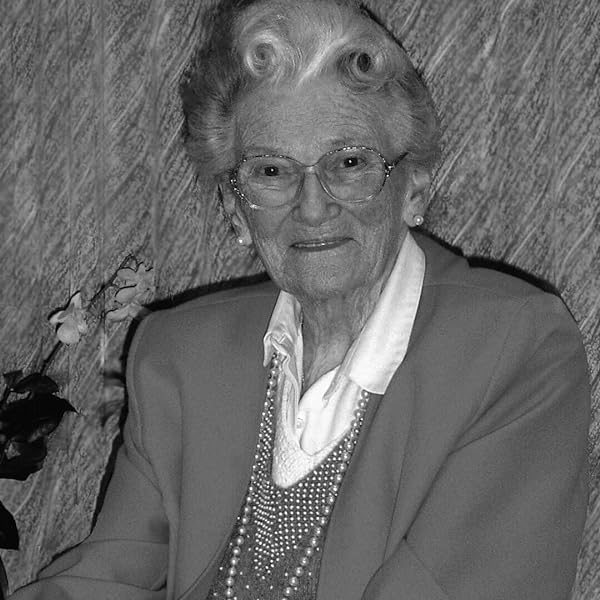
I thought that, today, I would write a little about Eileen Caddy. Even though Eileen wasn’t a psychotherapist, wasn’t an academic, and wasn’t a guru, she left a huge mark on many people around the world. If you strip away the candles, the idealisation, and the caricatures which some people project onto spiritual communities, what you are left with in Eileen Caddy’s work is something far more unsettling and far more relevant. She was not offering comfort or reassurance. Eileen was actually demanding responsibility. I shall explain!
And if you hadn’t come across Caddy, she is best known as a co-founder of the Findhorn Foundation, but that label alone misses the point somewhat. Her real contribution to the world was not institutional, but methodological. She articulated and lived a discipline of inner listening that treated conscience, intuition, and moral clarity as practical tools, not vague spiritual sentiments.
At a time when spirituality is often reduced to self-soothing or personal branding, her work stands as a corrective. And as a Psychotherapist, I think we should take note of anyone that contributes something powerful to humanity. And Caddy, in my view, did just that.

Inner listening as discipline, not indulgence
In a nutshell, Caddy’s core practice was deceptively simple. She called it listening to the still small voice within. What made it radical was not the idea itself, which appears in many traditions, but the standard she applied to it.
Inner guidance, in her framework, was not about affirmation or preference. It was about obedience to what was heard, even when inconvenient, socially risky, or materially costly. This is where most modern spiritual discourse quietly backs away. People like the language of intuition until it asks something difficult.
Caddy insisted that inner listening had consequences. If you claimed to hear guidance, you were accountable for how you acted on it. This turns spirituality from identity into practice, and from comfort into exposure.
Embodiment over abstraction
Much spiritual writing floats safely above the ground. Caddy’s did not. Her guidance was tested in daily life, in work, conflict, scarcity, leadership, and community living. The early Findhorn experiment did not succeed because of belief. It survived because of disciplined attention, shared labour, and an ethic of responsibility. The early experiment also shows us what a few people can accomplish with the right determination, mindset, and self-belief.
This is why her work matters beyond spiritual circles. Caddy generously demonstrated that inner orientation can shape outer systems. Decision-making, leadership, and cooperation can be informed by values that are not purely economic or bureaucratic. And ultimately demonstrated that this can work, without collapsing into chaos.
That balance is rare.
A counterweight to therapeutic dependency
There is an uncomfortable overlap between modern spirituality and modern therapy. Both can drift into endless processing with little expectation of change. Therapy feels nice, warm, and fuzzy. But in that process dependency can breed, and in psychotherapeutic terms, can become ‘confluent’. This is when we lose sight of difference. Caddy’s work cuts across that tendency.
And so Caddy did not try to encourage people to endlessly analyse their wounds. Caddy placed great emphasis on service to others and self, growth, and alignment rather than being disjointed. The self was not the final project or goal, but the instrument with which to align oneself better with the world.
This matters in a culture where healing is often framed as permanent fragility. Caddy’s approach assumed strength, capacity, and agency, even in difficulty. That assumption alone is quietly subversive because it demands the belief that there are possibilities we may not necessarily believe. But there is a need to trust the process.
Feminine authority without apology
Caddy exercised spiritual authority without theatrics and without permission – she was warm, she was funny, but she was, ultimately, sharp. In the mid-twentieth century, that mattered. She did not frame her leadership as rebellion or as victimhood, despite a tricky past. She simply acted from conviction. She saw, owned, and led from an adult ego state – not victim or rescuer – and that, I believe, is why she was successful.
Her voice was calm, precise, and uncompromising. That combination is still rare. It challenges both patriarchal dismissal and contemporary tendencies to dilute authority into relatability. And even though her husband had a powerful personality, it was she who led. Quietly, with conviction.
Why her work still challenges us
It can be unusual to think that Caddy’s work is challenging, but it is. It is natural for us to switch into child ego states, we want to be rescued, and many of us want to be seen as victims. Social media encourages us to open our wounds to the world. And I don’t think it’s any coincidence that youngsters now see it as legitimate do so on camera, whatever the context.
The reason Eileen Caddy still matters is not because her ideas are comforting. They are not. They ask questions most people would rather avoid. Here are a few:
Are you actually listening, or just interpreting your preferences as intuition?
Are you willing to act on what you claim to value?
Does your inner life produce clarity, or just language?
Her work exposes spiritual bypassing, motivational rhetoric, and passive introspection for what they are. Evasion. She is Gestalt and she doesn’t know it. In that sense, her legacy is not the Findhorn Foundation, or any specific teaching, but a standard. A reminder that inner work is only real when it changes how you live, how you decide, and how you relate to others. You can talk the talk, but you need to ultimately walk the walk.
That is why her work endures. And this is why you should read her writings, embrace her thinking, and begin to carve out a different life for yourself with those principles.