
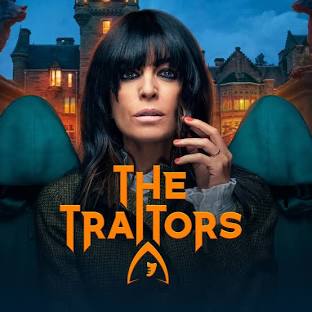
Scapegoating, suspicion, and our hunger to hunt difference
The global popularity of The Traitors is often explained away as clever production, sharp editing, and a winning twist on the reality television format. That explanation is convenient. It avoids the more uncomfortable question. But have you ever wondered why so many people find this particular game so gripping, even satisfying?
At its core, The Traitors is not really about strategy, money, or deception. It is about suspicion. It is about how quickly groups turn on one another, how eagerly difference is hunted down, and how readily moral certainty replaces reflection. Its success exposes something darker and far older in us. This is not a harmless parlour game. It is a ritualised rehearsal of scapegoating.
The show works because it mirrors instincts we rarely like to acknowledge; as long as we are seeing it on the screen, we do not have to own it in ourselves.
The Mechanics of Suspicion
Strip the format back to its essentials and the structure is stark. A group is told that some among them are dangerous. The danger is invisible. There is no reliable evidence. The group must identify the threat or be destroyed.
This is the oldest social experiment in the world.
Once suspicion is introduced, trust collapses almost instantly. Every behaviour becomes suspect. Silence is guilt. Confidence is guilt. Emotion is guilt. Calmness is guilt. The absence of proof is not reassuring. It is incriminating.
The show does not create paranoia. It reveals how thin the veneer of cooperation really is when fear is introduced.
What makes The Traitors so compelling is not the intellectual puzzle. It is the emotional permission it gives viewers. You are invited to judge, accuse, and condemn, all while feeling justified. Nay, positively encouraged.
The Comfort of a Villain
Human beings crave moral clarity. Ambiguity is exhausting. Complexity requires patience. Self-reflection is costly.
Scapegoating offers relief.
If the problem is “them,” then we are safe. If the danger is external, then we are righteous. If someone can be expelled, blamed, or destroyed, then order feels restored. And there is no coincidence that people of difference usually find themselves ejected first – the people of colour usually.
The brilliance of The Traitors is that it engineers this process on a nightly basis. Each banishment ceremony provides a moment of catharsis. The group has acted. The threat has been named. The anxiety subsides, briefly.
It does not matter how often the group is wrong. The ritual itself is what matters.
This mirrors real social behaviour with disturbing accuracy.
Difference as a Trigger
One of the most revealing aspects of the show is who tends to be suspected.
It is rarely the bland or the conforming. It is the quiet one. The intense one. The emotionally expressive one. The analytical one. The person who does not perform normality in the expected way.
Difference becomes danger.
This is not accidental. Groups under threat do not look for evidence. They look for deviation. Anything that stands out becomes a potential liability. The group unconsciously asks, “Who makes us uncomfortable?” and then retrofits a narrative of guilt.
This dynamic plays out relentlessly across the series. Contestants are accused not for what they have done, but for who they are.
That should trouble us far more than it entertains us.
Moral Certainty Without Accountability
Another uncomfortable truth revealed by the show is how easily people adopt moral authority when given a framework that legitimises it.
Accusations are delivered with suave confidence. Lives are dismantled verbally in public without empathy. Character assassination becomes a strategic move. And when someone is wrongfully banished, there is rarely remorse – the banishment often reveals other forces at play. But the game does absolve responsibility or accountability.
This is crucial.
The structure of The Traitors removes accountability while amplifying power. You can destroy someone socially and feel virtuous doing it. The format encourages certainty without evidence and punishment without reflection.
History should make us wary of systems that operate this way.
Why Viewers Love It
The popularity of the show cannot be separated from the pleasure it offers viewers.
Watching from the outside provides a sense of superiority. We know who the traitors are. We see how foolish the faithful appear. We judge their mistakes. We feel clever, safe, and morally intact.
But this perspective is an illusion.
What the show actually demonstrates is not how stupid people are under pressure, but how human they are. Viewers are not exempt from the same instincts. They are simply not placed inside the pressure cooker.
The enjoyment comes from distance. The danger lies in forgetting that distance.
Scapegoating as Social Glue
One of the most unsettling aspects of scapegoating is that it works. Temporarily.
When a group unites against a common enemy, internal tensions ease. Belonging increases. Cohesion improves. Purpose sharpens. For a moment, the group feels alive. And you may have experienced this yourself, I certainly have. As someone of difference, there is always a risk in new groups, where you become the repository of the groups’ anxieties, and when unmanaged, things can escalate dramatically.
The Traitors exploits this perfectly. Each accusation strengthens group identity. Each banishment reaffirms who belongs and who does not.
But this cohesion is built on violence, even if symbolic. It requires a sacrifice. Someone must carry the fear so that others can feel safe. Have you ever seen this being acted out in a team? I’ll bet most of you have – pulling together with colleagues to dislike and undermine the ‘other’.
This is not entertainment. It is anthropology.
The Illusion of Rationality
Many fans defend the show by framing it as a logical game. They emphasise strategy, deduction, and psychological insight.
This is self-deception.
Very little of what happens in the programme is rational. Decisions are driven by fear, projection, alliance, and emotional contagion. Logical arguments are cherry-picked to support gut feelings that were formed first.
This mirrors how humans actually behave, not how we like to imagine we behave.
The show succeeds because it does not require intelligence. It requires instinct. And instinct is where the darker truths live.
A Mirror We Do Not Want
The deeper discomfort lies in what The Traitors says about wider culture. In particular, The Traitors shows us how cancel culture functions. The traitor is identified, and then cancelled. Once they are cancelled, everyone feels safe again, and moves on to the next.
We are living in an era obsessed with exposure, call-outs, and moral sorting. Social media thrives on suspicion. Institutions panic under perceived threat. Communities fracture around narratives of danger and purity.
The show does not create this environment. It reflects it back to us in a distilled, consumable form.
We recognise the dynamics because we are already immersed in them.
Why This Matters
It would be easy to dismiss The Traitors as ‘just a game’. That dismissal is itself a defence.
Games are where cultures rehearse their values. Ritualised play reveals what we reward, what we excuse, and what we enjoy when consequences are safely contained.
The popularity of this programme suggests that we are deeply comfortable watching, and participating in, the destruction of others when it is framed as necessary. Take the scapegoating also of social workers – how much do we feel a sigh of relief when the fickle finger of fate points towards the Lisa Arthurworreys of the world, or the Carol Baptistes – especially powerful if they are people of colour, as are these.
That should give us pause.
The Unasked Question
The most important question the show never asks is this:
What would it look like to resist the hunt?
There are moments when contestants hesitate, express empathy, or question the process itself. These moments are uncomfortable. They slow the game. They threaten the structure. They rarely last.
The format punishes reflection.
And that may be the darkest truth of all. And the most sobering one for you and I. When we stop reflecting, we stop being.
Conclusion
The Traitors is successful because it taps into something ancient and unresolved in human psychology. Our fear of the unseen enemy. Our hunger for certainty. Our willingness to sacrifice difference in the name of safety. But the show is ultimately a mirror; a sinister projection of our own humanity. This is more documentary than entertainment, although it is entertaining.
My question is not why people behave the way they do inside the castle. My question is why so many of us enjoy watching it, night after night, without recognising ourselves in the process. And my encouragement is, the next time you join forces with someone else in the team to scapegoat someone else, step out of it, reflect, and try to focus more upon your individual relationships, rather than being led by someone else.
Next time I apply this to a discussion of immigration.